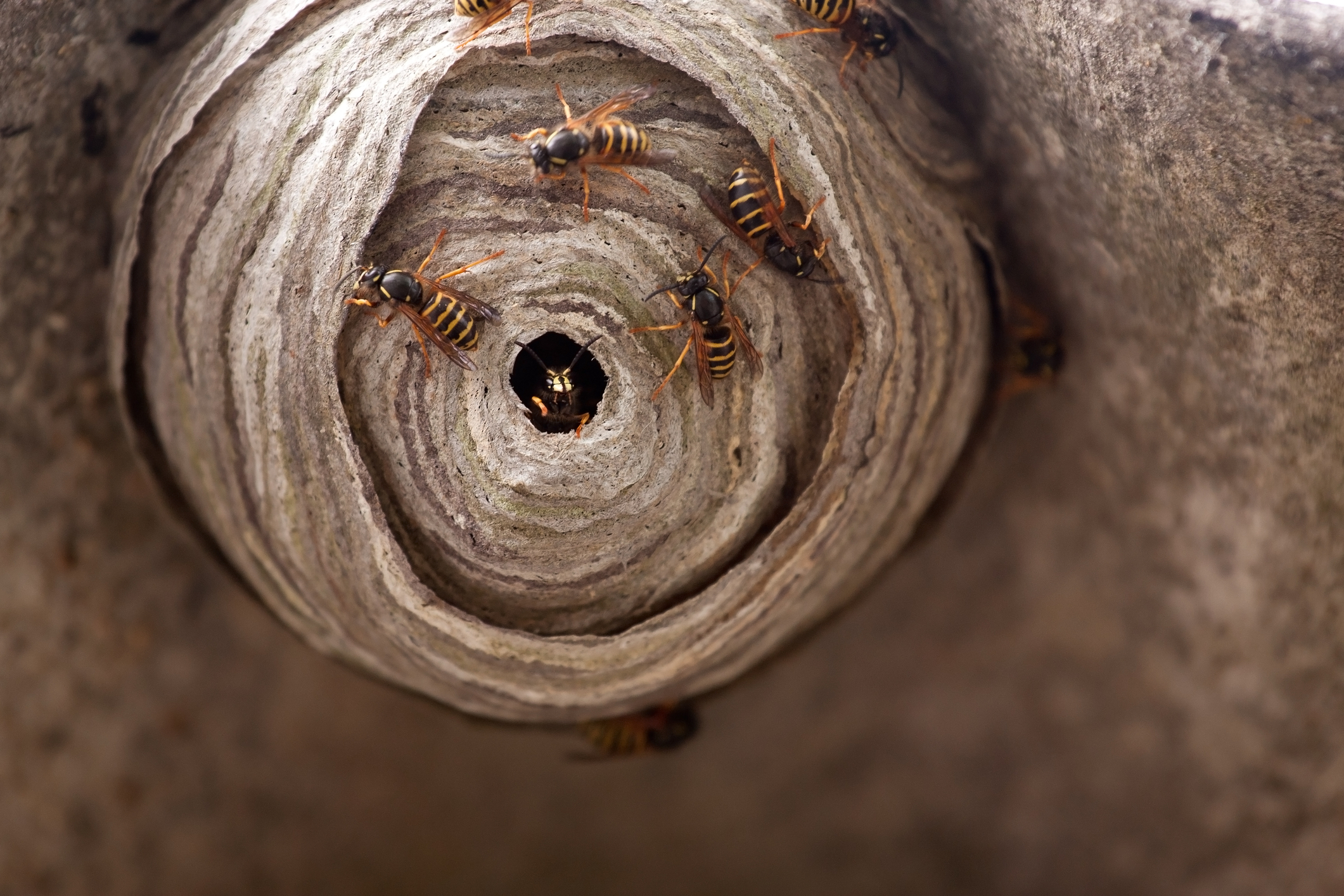
A wasp problem rarely announces itself with drama at first.
It starts small. One wasp circles the patio light. Another disappears under the roof edge. A third keeps returning to the same crack near the garage trim. Most homeowners shrug it off until the pattern becomes hard to ignore.
Then one Saturday, someone opens the back door with a plate of burgers, and suddenly the patio feels less like a place to relax and more like a tiny airport with angry wings.
That is when wasp nest removal becomes urgent. But the smartest approach starts before the nest gets big, before kids and pets have to avoid the yard, and before someone reaches for a can of spray without knowing what is hiding behind the siding.
For homeowners in Albuquerque, Rio Rancho, Bernalillo County, and nearby New Mexico communities, wasp prevention is not about fear. It is about reading the signs early, removing what attracts them, and knowing when a nest needs professional attention.
Key Takeaways
- Wasps usually return because food, water, shelter, or entry points are still available.
- Prevention works best in early spring and early summer while nests are small.
- Yellowjackets, paper wasps, hornets, bees, and solitary wasps should not all be treated the same.
- Hidden, high, underground, or high-traffic nests are safer for professionals to handle.
Why Wasp Nest Removal Is Only Half the Job
Removing a nest solves the immediate problem. Preventing the next one solves the pattern.
A homeowner may knock down an old paper nest under the eave and feel done. The trouble is that the same shaded eave, nearby trash bin, loose soffit, and dripping hose are still there. To a queen wasp looking for a protected place to start a colony, that spot still looks like a good neighborhood.
Social wasps such as yellowjackets and paper wasps often begin new nests in spring when overwintered queens become active. As the season moves from spring into summer, colonies grow and workers begin searching for protein and sugars to feed the colony. By late summer, yellowjackets can become more noticeable around picnic food, trash, fruit, and sweet drinks.
That is why prevention deserves its own plan. Wasp nest removal gets rid of today’s risk. A prevention plan makes the property less inviting tomorrow.
What Attracts Wasps to a Home?
Wasps are drawn to places that offer easy food, moisture, protection, and low disturbance.
Around Albuquerque homes, common attractants include uncovered trash, pet food bowls, fallen fruit, leaking irrigation, shaded eaves, dense shrubs, attic gaps, porch ceilings, shed corners, and wall voids. A small opening near a utility line or roof edge may not look like much from the ground, but it can give wasps access to a protected cavity.
The University of California IPM program advises keeping food and pet food covered or indoors, covering soda cans, sealing garbage, and picking up ripe fruit to reduce wasp attraction. It also warns that wasps flying directly in and out of a single hole in the ground or building often signal a nest.
Think of it like this: wasps are not moving in because they like the paint color. They are moving in because the property checks enough boxes.
How to Prevent Wasp Infestations With the “Four-Zone Yard Check”
The best prevention system is simple enough to remember and practical enough to repeat.
Use the Four-Zone Yard Check once a month during warm weather and after major yard cleanups, storms, or outdoor gatherings.
1. The Food Zone
This includes patios, grills, outdoor tables, trash cans, compost areas, fruit trees, and pet feeding spots.
Look for:
- Open garbage lids
- Sticky drink spills
- Pet food left outside
- Fallen fruit
- Meat scraps near grills
- Overfilled bins
- Dirty recycling containers
Wasps, especially yellowjackets, can scavenge on sweets, fruit, soft drinks, meat, fish, and other picnic foods. University of Kentucky Entomology recommends keeping food and beverages covered until they are ready to be eaten, cleaning spills quickly, and using tight-fitting trash lids.
A simple habit helps here: clean the patio like guests are coming over again tomorrow. Wasps remember food locations longer than homeowners expect.
2. The Water Zone
In dry New Mexico weather, water can become more attractive than people realize.
Check:
- Bird baths
- Plant saucers
- Leaky hose bibs
- Irrigation puddles
- Pooling water near low spots
- Pet water bowls
- AC condensate drainage areas
Wasps need moisture, especially during hot weather. Removing standing water also supports broader outdoor pest control because other pests use those same damp spots.
3. The Shelter Zone
This is where many wasp nest prevention problems begin.
Inspect:
- Eaves
- Soffits
- Fascia boards
- Porch ceilings
- Patio covers
- Shed rafters
- Fence posts
- Tree limbs
- Dense shrubs
- Deck undersides
Paper wasps often build open paper nests in protected spots such as under eaves, behind shutters, under tree branches, and near human activity areas when shelter is available.
Early nests can look harmless, almost like a tiny gray umbrella. That is the best time to notice them, from a safe distance, before they become a daily obstacle by the door.
4. The Entry Zone
This is the perimeter of the house.
Walk slowly around the home and check:
- Gaps around windows
- Door frames
- Torn screens
- Attic vents
- Utility penetrations
- Cracks in siding
- Roofline gaps
- Weep holes
- Garage trim
- Wall void access points
The goal is not to seal every inch of a home into a submarine. The goal is to close obvious pest highways before they turn into nesting sites.
Wasp Prevention Tips for Homeowners
Here is the practical version homeowners can actually use.
- Seal trash cans tightly and rinse sticky containers before tossing them.
- Pick up fallen fruit before it ferments or attracts foraging wasps.
- Keep outdoor food covered until it is served.
- Bring pet food indoors after meals.
- Repair torn screens and worn weather stripping.
- Seal small cracks near eaves, doors, windows, and utility lines.
- Trim shrubs and branches away from rooflines and patio covers.
- Watch repeated flight paths around walls, soil, or roof edges.
- Keep children and pets away from active nests.
- Avoid swatting at wasps around food or drinks.
That last one matters. UC IPM recommends staying calm if a wasp lands on you and avoiding sudden swatting or running. Easy? Not always. But better than turning one curious wasp into a whole scene.
How Can Homeowners Tell What Kind of Nest They Have?
Not every buzzing insect around a home should trigger the same response.
Paper wasps often have slender bodies and long dangling legs. Their nests usually look like an exposed comb that opens downward. Yellowjackets are more compact and may nest in the ground, in wall voids, or in cavities. Hornets may build enclosed paper nests, often above ground. Bees can look similar from a distance, but they play a different role and should not be automatically treated as pests.
NMSU notes that several large wasp species found in New Mexico are generally not aggressive unless provoked and can act as pollinators or predators in local ecosystems. NMSU Extension also describes yellowjackets as beneficial insects when they are not bothering people nearby because they feed larvae caterpillars, flies, and other insects.
That is the balancing act. A nest over a doorway, in a wall, underground near a walkway, or beside a play area is a safety concern. A beneficial wasp far from people may not need the same level of response.
When Is a Wasp Nest Dangerous?
A wasp nest becomes more concerning when it is close to people, pets, entrances, seating areas, play zones, business doors, or walkways.
The risk also rises when the nest is:
- Underground
- Inside a wall or ceiling
- Near a roofline
- High above ground
- Large and active
- Close to children or pets
- Near someone with a known sting allergy
- In a busy commercial area
The American College of Allergy, Asthma & Immunology estimates that between 1.6% and 5.1% of people in the United States have experienced life-threatening allergic reactions to insect stings. Stings from honeybees, hornets, wasps, yellow jackets, and fire ants are known to cause allergic reactions to injected venom.
That single fact changes the way a homeowner should think about DIY wasp control. The question is not, “Can someone spray it?” The better question is, “What happens if the nest reacts badly?”
Professional Wasp Nest Removal vs DIY: A Simple Decision Table
Situation | DIY Prevention May Help | Call a Professional |
One or two wasps around food | Cover food, clean spills, seal trash | If activity keeps returning to one spot |
Small early nest far from people | Monitor from a safe distance | If anyone has allergy concerns |
Nest under a high eave | Do not climb toward it | Yes, height adds fall and sting risk |
Wasps entering a wall gap | Do not spray blindly | Yes, hidden nests need inspection |
Ground nest near a path | Keep people and pets away | Yes, yellowjackets may defend quickly |
Activity near a business entrance | Improve sanitation | Yes, public safety matters |
Bees suspected | Do not treat as wasps | Contact a qualified bee or pest expert |
This table is not about making homeowners feel helpless. It is about matching the response to the risk.
What Most People Get Wrong About Wasp Control
Mistake 1: Treating every wasp like an enemy
Wasps can help control other insects and may support local ecosystems. The problem starts when nesting behavior overlaps with people, pets, doors, patios, or workspaces.
Mistake 2: Waiting until late summer
By late summer, colonies are more established and foraging activity can become more noticeable. Early inspections are calmer, safer, and usually more productive.
Mistake 3: Spraying without identifying the nest
A paper wasp nest under an eave, a yellowjacket nest underground, and activity inside a wall void are not the same problem. Guessing can push insects deeper into a structure or make them defensive.
Mistake 4: Ignoring the food source
If the trash smells like last night’s cookout, wasps do not need a formal invitation. They will find it.
Mistake 5: Forgetting about exclusion
Pest prevention services are not just about treatment. Good prevention includes sealing access points, trimming shelter areas, and reducing conducive conditions around the home.
What Does a Professional Inspection Look For?
A trained technician looks beyond the visible nest.
A proper inspection may include:
- Species clues
- Nest location
- Flight paths
- Entry points
- Activity level
- Risk to people and pets
- Nearby attractants
- Structural gaps
- Safe treatment access
- Prevention recommendations
The Environmental Protection Agency recommends asking whether a pesticide is needed, choosing less toxic approaches when possible, and reading product labels carefully for proper use, storage, and disposal. That aligns with an Integrated Pest Management approach: inspect first, treat when needed, and reduce the conditions that allowed the pest problem to build.
For local homeowners, that may mean pairing professional wasp removal with practical steps such as sealing trim gaps, tightening trash storage, improving yard cleanup, and checking roofline activity through the warm season.
A Better Seasonal Plan for Albuquerque Homes
The most effective wasp prevention plan follows the season instead of waiting for a crisis.
Early Spring
Walk the property before outdoor activity picks up. Look under eaves, patio covers, sheds, and play equipment. Seal cracks and repair screens.
Late Spring
Watch for nest starts and repeated flight paths. Trim shrubs near the home. Keep bins sealed as temperatures rise.
Summer
Stay disciplined with food, drinks, pet bowls, and trash. Check patios, grills, and shaded roof areas after gatherings.
Late Summer
Expect more nuisance activity around sweet foods and garbage. Keep outdoor dining areas cleaner than usual. Do not swat at foragers.
Fall and Winter
Remove abandoned nests only after activity has ended. Use the cooler season to repair gaps, screens, and exterior trim before the next nesting cycle.
When to Get Local Help
A wasp control service is most helpful when the nest location makes removal risky or uncertain. That includes a wasp nest in roof areas, wall voids, attic spaces, crawlspaces, ground holes, tall trees, commercial entrances, schools, rentals, patios, and spots near pets or children.
Homeowners should also seek help when they are unsure whether they are dealing with yellow jacket removal, hornet nest removal, paper wasp control, bees, or another stinging insect issue.
For Albuquerque-area residential pest control, outdoor pest management, emergency pest control, preventive pest treatments, and inspection-based service, The Pest Of Times LLC can be reached at 505-259-3878 or thepestoftimesllc@gmail.com. Its website describes the company as locally owned and operated, licensed and insured, and focused on safe, thorough pest solutions for Albuquerque and surrounding areas.
Conclusion: Make Your Home Less Interesting to Wasps
The best wasp strategy is not dramatic. It is steady.
Clean the food sources. Remove standing water. Trim the shelter. Seal the gaps. Watch early flight patterns. Respect active nests. Call for professional wasp nest removal when the nest is hidden, high, aggressive, underground, or too close to daily life.
That is how homeowners move from “Why are they back again?” to “We handled the cause, not just the nest.”
Prevention gives the yard back its normal rhythm: kids outside, pets wandering safely, dinner on the patio, and no one doing the frantic wasp dance with a paper plate in hand.
FAQs
How to prevent wasp nests around a house?
Keep trash sealed, cover food and drinks, remove fallen fruit, repair screens, seal exterior gaps, and check eaves, sheds, and patio covers early in the season.
Why do wasps keep coming back?
Wasps often return because the property still has food, water, shelter, or entry points. Removing the nest without fixing those conditions can invite repeat activity.
What attracts wasps to your home?
Sugary drinks, meat scraps, pet food, open garbage, ripe fruit, standing water, dense shrubs, roof gaps, and quiet covered spaces can all attract wasps.
How do you identify a wasp nest?
Look at the location and shape. Paper wasps often build open comb nests under eaves. Yellowjackets may nest underground or inside wall voids.
When are wasps most active in Albuquerque?
Wasps are usually more noticeable during warm months, especially from spring through late summer when nests grow and outdoor food sources become easier to find.
Do wasps reuse old nests?
Many social wasps use nests for one season, but the same sheltered area may attract new nesting if the conditions remain the same.
How dangerous are wasp nests?
A nest can be dangerous when it is near doors, patios, walkways, pets, children, or anyone with a sting allergy. Underground and hidden nests deserve extra caution.
Is professional wasp removal worth it?
Professional wasp removal is worth it for large, hidden, high, underground, aggressive, or high-traffic nests because inspection and safe access matter.
How much does wasp nest removal cost?
Cost depends on nest location, size, species, accessibility, urgency, and prevention needs. A local inspection gives the most accurate price.
Who removes wasp nests?
Licensed pest control professionals remove wasp nests, especially when the nest is difficult to reach, inside a structure, underground, or near people and pets.